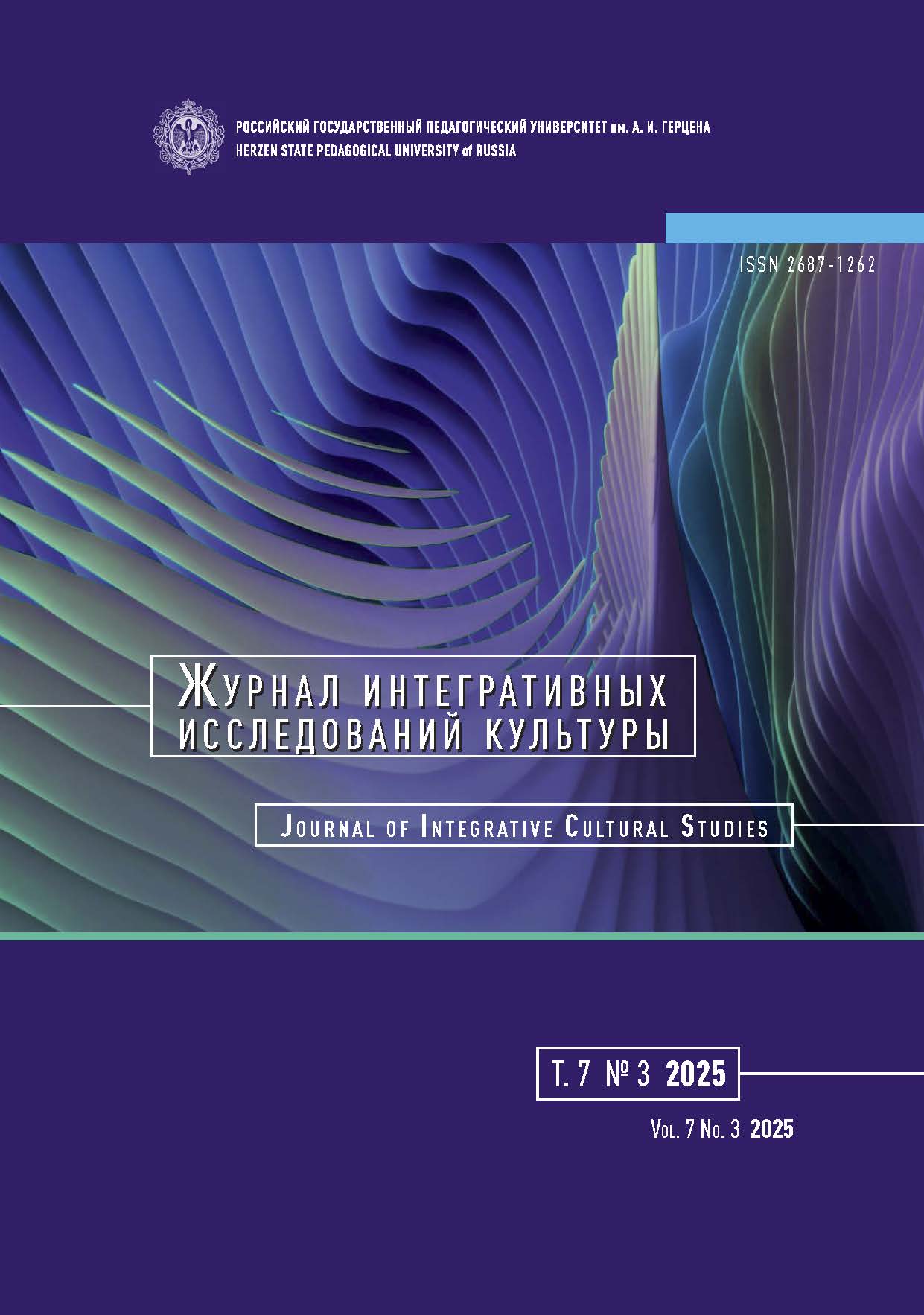
The urban environment of Saint Petersburg as a didactic resource in foreign language teacher education
DOI:
https://doi.org/10.33910/2687-1262-2025-7-3-286-291Keywords:
teacher education, urban environment, didactic resource, Saint Petersburg, foreign language, authentic materials, sociocultural competence, project-based activities, local history principleAbstract
This article examines the potential of the Saint Petersburg urban environment as a unique didactic resource. It provides theoretical substantiation and offers practical methods for using this resource in teacher education in general, and foreign language teacher education in particular. The article aims to identify and describe, through practical examples, the main areas and forms of utilizing the Saint Petersburg urban environment in the professional training of foreign language teachers to enhance their personal development and methodological expertise. It is assumed that the targeted use of urban space elements enhances students’ communicative and sociocultural competence in a foreign language, increases motivation and the authenticity of the educational process, and fosters methodological flexibility, creativity, and skills in designing educational activities. Furthermore, it develops digital literacy and the ability to work with modern technologies, while facilitating the teacher transition from a mere knowledge transmitter to organizer of educational activities. Modern digital perception allows the city to be viewed as a hypertext, where every element (buildings, streets, memorial plaques) contains references to historical periods, cultural phenomena, and texts — all of which provide invaluable material for linguistic and cultural analysis. Herzen University has accumulated extensive experience of using the urban environment to train future foreign language teachers. For instance, the Department of Northern European Languages is implementing an interdisciplinary project titled ‘The Saint Petersburg code: cultural and educational decoding of urban space’. Drawing on Herzen University’s practical experience, the article highlights key areas of work: the creation of authentic teaching materials based on urban objects, project-based activities, quests, and virtual tours.
References
СПИСОК ЛИТЕРАТУРЫ
Белкина, Н. В. (2018) Организация профориентации учащихся через систему практикоориентированных заданий во внеучебной деятельности. Большой Конференц Зал: дополнительное образование — векторы развития, № 1, с. 55–59.
Буланов, М. В., Россинская, А. Н., Асонова, Е. А. (2021) Образовательная урбанистика: опыт описания ключевых понятий. Научно педагогическое-обозрение, № 6 (40), с. 236–245. https://doi.org/10.23951/2307-6127-2021-6-236-245
Плиева, А. О. (2023) Использование ресурсов города для развития лингвистических способностей студентов. Проблемы современного педагогического образования, № 78-4, с. 156–158.
Самойлова, К. Г. (2025) Групповой профессиональный проект студентов-лингвистов как способ повышения мотивации к изучению финского языка (на примере проекта «Сказочные уроки» в РГПУ им. А. И. Герцена). Наукосфера, № 10-1, с. 56–61. https://doi.org/10.5281/zenodo.17283654
Чичканова, Т. А. (2014) Пространство города как предмет педагогического исследования (к постановке проблемы). Науковедение, № 4 (23), статья 101PVN414.
REFERENCES
Belkina, N. V. (2018) Organizatsiya proforientatsii uchashchikhsya cherez sistemu praktikoorientirovannykh zadanij vo vneuchebnoj deyatel’nosti [Organizing student career guidance through a system of practice-oriented assignments in extracurricular activities]. Bol’shoy Konferents Zal: dopolnitel’noye obrazovaniye — vektory razvitiya, no. 1, pp. 55–59. (In Russian)
Bulanov, M. V., Rossinskaya, A. N., Asonova, E. A . (2021) Obrazovatel’naya urbanistika: opyt opisaniya klyuchevykh ponyatij [Educational urban studies: Approach to describing key concepts]. Nauchno pedagogicheskoye-obozreniye — Pedagogical Review, no. 6 (40), pp. 236–245. https://doi.org/10.23951/2307-6127-2021-6-236-245 (In Russian)
Chichkanova, T. A. (2014) Prostranstvo goroda kak predmet pedagogicheskogo issledovaniya (k postanovke problemy) [The city as a subject of pedagogical research (Statement of the problem)]. Naukovedenie, no. 4 (23), article 101PVN414. (In Russian)
Plieva, A. O. (2023) Ispol’zovanie resursov goroda dlya razvitiya lingvisticheskikh sposobnostej studentov [Use of city resources to develop the linguistic abilities of students]. Problemy sovremennogo pedagogicheskogo obrazovaniya — Problems of Modern Pedagogical Education, no. 78-4, pp. 156–158. (In Russian)
Samoilova, K. G. (2025) Gruppovoj professional’nyj proekt studentov lingvistov kak sposob povysheniya motivatsii k izucheniyu finskogo yazyka (na primere proekta “Skazochnye uroki” v RGPU im. A. I. Gertsena) [A group professional project of linguistic students as a way to increase motivation to study the finnish language (using the example of the “Fabulous Lessons” project at the A. I. Herzen Russian state pedagogical university)]. Naukosfera, no. 10-1, pp. 56–61. https://doi.org/10.5281/zenodo.17283654 (In Russian)
Downloads
Published
Issue
Section
License
Copyright (c) 2025 Natalia V. Belkina

This work is licensed under a Creative Commons Attribution 4.0 International License.
The work is provided under the terms of the Public Offer and of Creative Commons public license Creative Commons Attribution 4.0 International (CC BY 4.0).
This license permits an unlimited number of users to copy and redistribute the material in any medium or format, and to remix, transform, and build upon the material for any purpose, including commercial use.
This license retains copyright for the authors but allows others to freely distribute, use, and adapt the work, on the mandatory condition that appropriate credit is given. Users must provide a correct link to the original publication in our journal, cite the authors' names, and indicate if any changes were made.
Copyright remains with the authors. The CC BY 4.0 license does not transfer rights to third parties but rather grants users prior permission for use, provided the attribution condition is met. Any use of the work will be governed by the terms of this license.